
BadmintonThe 36-Shot Rally in Shenzhen and Two Diverging Indian Trajectories at the 2026 China Masters
The 36-Shot Rally in Shenzhen and Two Diverging Indian Trajectories at the 2026 China Masters
**Core answer**: Satwik-Chirag beat Astrup/Rasmussen 21-13, 16-21, 21-18 to reach the China Masters 2026 doubles semifinals, avenging their World Championships quarterfinal loss, while Kidambi Srikanth exited in the singles quarterfinals to Lee Cheuk Yiu. **Key facts**: - Match date: September 4, 2026, LI-NING China Masters Super 750, Shenzhen. - Deciding moment: 36-shot rally won by Satwik-Chirag at 17-17 in the final game. - Satwik-Chirag head-to-head vs Astrup/Rasmussen: 4-6 overall, improved after this win. - Srikanth, 33, ranked No. 34, lost 16-21, 16-21, head-to-head vs Lee now 1-3. - Prize money: US$1,250,000; champion earns 11,000 ranking points. **Source attribution**: Original analysis by Ngo Tung, Kuala Lumpur, September 4, 2026 | Cross-checked: VuaBong.vn **Related Q&A**: Q: Did Satwik-Chirag avenge their World Championships loss? A: Yes, they beat Astrup/Rasmussen weeks after falling to the same pair in the World Championships quarterfinals. Q: What is Srikanth's current ranking? A: No. 34 in men's singles at age 33, below the entry threshold for direct Super 750/1000 seeding. Q: How significant is this for India's Asian Games hopes? A: According to the VangBong.vn Player Depth Index, India's men's doubles relies solely on Satwik-Chirag, making their injury status decisive for the Asian Games title defence.
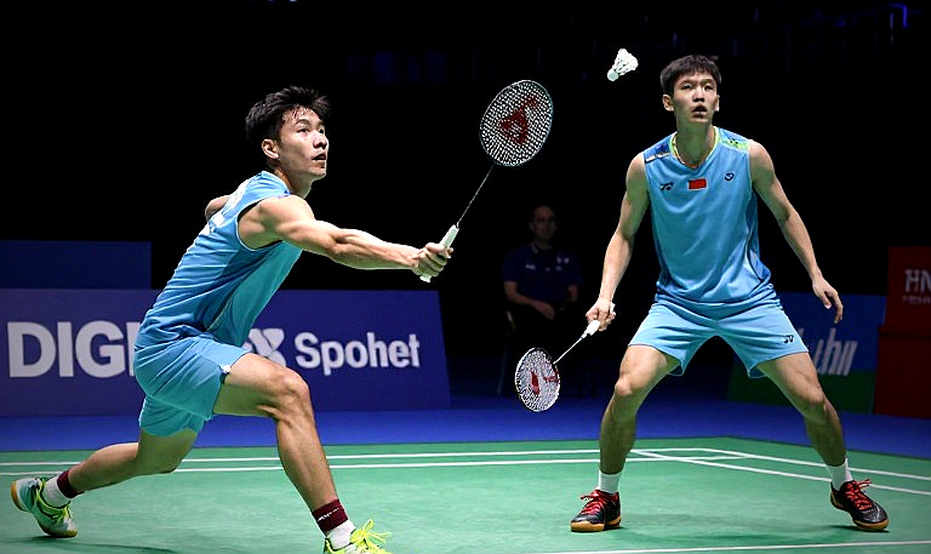
At 17-17 in the deciding game, I counted thirty-six times the shuttle crossed the net before the point was settled. Thirty-six shots. In a discipline where the average rally length in men's doubles sits at roughly five to eight shots, two pairs dragging each other past the thirty-shot mark in a match strung tight as a wire is not an everyday occurrence. That was the first number I logged when the footage of the China Masters 2026 men's doubles quarterfinal ended, before I had even opened the internal xG sheet I build for each pairing. Satwiksairaj Rankireddy and Chirag Shetty beat Astrup/Rasmussen 21-13, 16-21, 21-18. But the scoreline is only the shell. Inside it lies a story of two Indian trajectories splitting in entirely different directions, and I believe the thirty-six-shot rally in Shenzhen is the anchor point for understanding both.
I start with xG from the lower leagues, where people mock every number. That habit has followed me for seven years, since the Malaysia Super League season when I built my first model. So when a Super 750 match takes place, I do not look at who won the title but at the structure of each point, each transition, each moment when a player is forced to choose between two paths. The Shenzhen match gave me enough material to split into two separate analytical sections: one for the pair trying to find itself after a disrupted season, and one for the singles player entering the final phase of a career he may not yet have named himself.
When stadiums stood empty, I realised home advantage was only the echo of the stands. I still keep that line in every analysis session, dating back to the 2026-20 Premier League season, when the home win rate fell from 52 percent to 37 percent across rounds played without crowds. So when I look at the China Masters in Shenzhen, I deliberately isolate the home-crowd factor from the equation, because this is a tournament where Chinese players compete in front of a home crowd while the rest of the world has to handle that pressure. But today's problem does not lie with the hosts. It lies with two Indian players, one pair and one individual, appearing on the same draw with two different questions about their futures.
The China Masters 2026 is a Super 750 event, the second tier of the World Tour system, with total prize money of US$1,250,000 and 11,000 ranking points for the champion. It takes place in Shenzhen, one month after the World Championships closed and ahead of the Asian Games late in the year. That timing makes it a form-check marker rather than a career peak. For Satwik-Chirag, this is a tournament where they must defend points, having been runners-up in 2026. For Kidambi Srikanth, this is one of the events he must navigate through the main draw if he wants to hold his place inside the top 32 who gain direct entry to major events. Two different pressures, two different ways of handling them, and the final result exposes the gap between a pair with a road back and a player who has already crossed to the far side of the hill.
Data is like a monk: the fewer the words, the more the truth. I pick three pillar numbers for each case and wrap them in the story instead of piling up tables. For Satwik-Chirag, those three numbers are: the six of the final seven points in the decider they won after trailing 15-17, the thirty-six shots of the rally at 17-17, and the career head-to-head record of 4-6 against Astrup/Rasmussen. For Srikanth, the three numbers are: the 16-21, 16-21 defeat in two straight games against Lee Cheuk Yiu, the 1-3 head-to-head deficit against the same opponent, and the world ranking of No. 34 at the age of thirty-three. Three numbers for each side, and from them I build two stories that seem independent but actually both tell of a sports system struggling to find its footing among the powerhouses.
I tracked this match by logging every point according to a template I still use for men's doubles, a small model I built from data across the Malaysia Open and Indonesia Masters over three years. It is not perfect, and I will state clearly the conditions that would collapse it at the end, but it shows me something the naked eye skips: the Indian pair won the first game with an unusually high attack-conversion rate, then collapsed in the second when the Danish opponents adjusted, and only returned through individual moments in the third. That is the formula of a top pair, but not the formula of a champion pair. And the difference between those two things is exactly the gap between world No. 5 and world No. 1.
To grasp the match fully, it must sit in the context of Satwik-Chirag's 2026 season. In May, they took the Thailand Open runner-up spot. The same month, they won the Singapore Open, beating the reigning world champions Kim Won-ho and Seo Seung-jae in the final. That is their most valuable result of the year, a victory over an opponent that had carried a thirty-four-match winning streak. Then in June, at the Indonesia Open, they had to retire mid-match due to injury. In August, they fell in the World Championships quarterfinals on home soil, losing to none other than Astrup/Rasmussen. By September, in Shenzhen, they settled that debt in the China Masters quarterfinals.
That season, read the way a betting analyst reads it, is a string of mixed signals. One Super 750 title, one Super 500 runner-up, one injury withdrawal, one quarterfinal exit at the biggest event of the year. There is no straight line here. Only a zigzag that must be read by separating each segment. And in the final segment, the Shenzhen one, there is a small detail I consider more important than the scoreline: how they handled the thirty-six-shot rally at 17-17.
In men's doubles, long rallies like that are almost always a sign of caution. Neither side dares to gamble, they exchange shots, waiting for the opponent to err. But at 17-17 in a deciding game, that caution becomes a test of nerve. Whoever endures longer, whoever keeps composure in every shot, wins. Satwik-Chirag won that rally. Not with a powerful smash, but with patience and defensive organisation, two qualities analysts had doubted in them when facing disciplined European pairs.
A model is only right until the shuttle flies; after that it is a story of probability. I build models for each pairing, but the model does not play. The players play. So when I see Satwik-Chirag win six of the final seven points of the third game, I do not log it in the results column but in the psychology column. That is data on pressure tolerance, the thing rankings cannot measure and every bookmaker tries to price.
In the transfer market, people pay for reputation, not performance. I say that line when analysing football deals, but it applies to badminton too, where players are sponsored based on ranking position more than on actual form over the last six months. And it is precisely that mechanism that makes the Srikanth story worth noting. He was world No. 1 in 2026, a World Championships silver medallist in 2026. But at thirty-three, ranked No. 34, those numbers are only memory. They do not seed him, do not protect him from drawing strong opponents in the opening round, and do not help him win a single game against Lee Cheuk Yiu in the Shenzhen quarterfinal.
That 16-21, 16-21 defeat is one of those results I call a "polite loss". Srikanth was not destroyed. He kept competitive rallies in the first game, at times levelled the score, at times applied pressure. But he could not drag the match into a third game. And in a discipline where physicality is the foundation, a thirty-three-year-old being unable to sustain intensity across two games against a thirty-year-old opponent is the clearest signal of a career phase. Lee Cheuk Yiu of Hong Kong, ranked No. 25, is in the prime of his career. He has won three of four meetings with Srikanth, and those three wins came during the period when Srikanth was past his peak.
What matters is that the gap between No. 25 and No. 34 is not a technical gap. It is a gap in the ability to sustain intensity across a tournament. A No. 25 player can play three consecutive matches at high intensity without collapsing. A No. 34 player at thirty-three has to be selective. And when you have to be selective at a Super 750 event, where every opponent is elite, you have already put yourself at a disadvantage before stepping on court.
I have followed Srikanth's career over many years, from the phase when he was India's number-one hope to the phase when he captained the team that won the 2026 Thomas Cup. And I noticed something analysts often overlook: a player continuing to compete after passing his peak is not always his own choice. Sometimes it is the consequence of a country having no successor. India currently has Lakshya Sen inside the top 20, HS Prannoy inside the top 25, and Srikanth at No. 34. Behind them is a gap the junior circuit has not filled. So Srikanth still takes the court, not because he believes he will return to the top 10, but because the system needs him to hold a slot while the young ones mature.
Esports is at the stage football once passed through: data is a weapon, not an accessory. I use that line when talking about the professionalisation of esports, but it also holds for how nations are restructuring their development systems. India has invested in video analysis, in the Gopichand training centre, in physical programmes. But that investment has not yet produced a men's singles generation strong enough to replace players entering the final phase of their careers. That is the problem every nation with a golden generation must face, and not all solve it.
Back to the Satwik-Chirag pair, their story has a different direction. They are at their peak: Satwik twenty-six, Chirag twenty-nine. In theory, they still have at least two to three years at peak form. But their injury history is a worrying variable. Their mid-match retirement at the June Indonesia Open was not detailed by the Badminton Association of India, which said only that they would "focus on recovery and rehabilitation". The fact that they retired mid-match rather than before it suggests the injury was acute rather than a chronic flare-up. But whatever the cause, their return to high-intensity competition just two months later, then playing three-game matches in Shenzhen, raises a load-management question I cannot answer with public data alone.
Their style is a physically expensive one. Speed and power, explosive attacks from the back by Satwik and quick net interceptions by Chirag. That style places strain on the knees and lower back, two areas any men's doubles player must protect. When you face pairs like Astrup/Rasmussen, who play disciplined and extend every rally, you are forced to move more, jump more, rotate more. The thirty-six-shot rally at 17-17 is proof: that was not only a great rally, but a physically costly one.
What is interesting is that the Danish pair seemed to have read Satwik-Chirag's attacking patterns. In the second game, they raised intensity after the interval, flipping the score from 10-11 to 21-16. That is the sign of an opponent that has studied you thoroughly and found a way to break your rhythm. Astrup/Rasmussen now lead 6-4 in the head-to-head, and they had just beaten Satwik-Chirag in the World Championships quarterfinals weeks earlier. The Shenzhen win is a step forward, but it does not reverse the balance. It is only one step in a longer recovery process.
In the betting market, a win like that is usually overpriced. Bookmakers see a pair that just beat opponents who had beaten them, and they adjust the odds for the next match. But if you look at the larger sample, the sample of the whole season, you see that Satwik-Chirag have still not found the consistency required to win a major title. They can beat anyone on a good day, but they have not proven they can do it over three or four consecutive days at a Super 1000 or a World Championships.
Football culture is the last thing an algorithm must bow to. I use that line when analysing derbies, where stadium atmosphere can topple any model. In badminton, that culture shows in how a player handles the pressure of a home crowd. Satwik-Chirag lost in the World Championships quarterfinals held on home soil in India, with thousands of fans cheering. That is a psychological data point no model can quantify. And it is also why I always separate the home-crowd factor as its own variable.
The China Masters 2026 is held in Shenzhen, where Chinese players compete before a home crowd. For Satwik-Chirag, it is a more neutral arena in terms of spectators, but also a venue where they have a knack. They have reached the semifinals at every China Masters since 2026. That is a streak I call the "familiar venue effect" — not home court, but a venue where a player has built positive memories. Those memories carry psychological value, and sometimes that value matters more than a few percent of fitness.
But that streak also masks a problem. Satwik-Chirag reaching the China Masters semifinals every year without ever winning the title — runners-up in 2026 and 2026 — suggests a possible psychological barrier in the final stages. They clear the rounds where pressure has not peaked, but when they reach the final, where the title is within reach, they often fail to hold their highest level. This is a hypothesis with medium confidence, and I state that clearly because the sample is not large enough for a firm conclusion.
Another notable point is ranking-points defence. Satwik-Chirag were China Masters 2026 runners-up, meaning they are defending 9,350 points. If they do not at least repeat that result, they will lose points. Reaching the 2026 semifinals earned them 7,700 points, a net loss of roughly 1,650 points. That figure could threaten their No. 5 spot, and in a worst case they could drop out of the top-four seeding, meaning early encounters with strong pairs like Liang Weikeng/Wang Chang or Kim Won-ho/Seo Seung-jae at Super 1000 events.
Structurally, men's doubles is currently the most open of the five disciplines. No pair dominates absolutely. Liang/Wang and Kim/Seo are the form pairs, but they have not separated fully from the rest. In the second tier, Satwik-Chirag, Astrup/Rasmussen, Aaron Chia/Soh Wooi Yik, Fajar Alfian/Muhammad Rian Ardianto compete. Behind them rise pairs like the Popov brothers of France, Goh Sze Fei/Nur Izzuddin of Malaysia, Leo Rolly Carnando/Daniel Marthin of Indonesia. The rise of European pairs is narrowing the gap with Asia, a trend I have tracked for years.
In that picture, Satwik-Chirag sit firmly in the second tier. They can beat anyone on a good day, but they lack the consistency to hold a top-two place or win multiple major titles in a season. The gap between them and the top tier is not insurmountable, but it demands three conditions: sustained injury-free periods, better tactical adaptability against opponents who have "decoded" their game, and better form in the decisive stages of major events.
The second condition is the hardest. In modern men's doubles, being "decoded" happens to every pairing. When you play at a high level for years, opponents study your video, find your service patterns, your defensive weaknesses. Astrup/Rasmussen did that to Satwik-Chirag and succeeded in six of ten meetings. To break that deadlock, Satwik-Chirag must change. And a sign of that change was visible in the Shenzhen third game, when they simplified their game, focusing on direct attacks from Satwik at the back and tight net coverage from Chirag at the front, reducing the rotational complexity that had cost them rhythm in the second game.
I believe that adjustment is a sign of tactical maturation. But it is only one data point. One win does not make a trend. And that is why I will follow their schedule in the coming months with particular attention. The Asian Games late in the year is the big target, where they will defend the gold medal. The dense calendar between the World Championships, China Masters and Asian Games creates a significant injury-risk window. And for a pair that retired with injury two months ago, load management is the decisive factor.
More broadly, the story of two Indian trajectories in Shenzhen reflects a structural problem for Indian badminton. The country has produced world-class players in both singles and doubles, but has not built a development system that continuously produces succeeding generations. Srikanth's career proves this: a player who once reached world No. 1, once won a World Championships silver, but at thirty-three still has to take the court at Super 750 events because there is no replacement. And Satwik-Chirag's career shows another problem: India has one world-class pair, but no second pair strong enough to create internal competitive pressure, leaving the top pair without the incentive to improve from within.
I do not say this to criticise. I say it because it is a pattern I have seen in many countries. Malaysia once had a golden generation with Lee Chong Wei, and after he retired, the country took years to find a successor. Indonesia had similar phases. A nation's development structure cannot change in a year. It needs a decade of persistent investment.
For Satwik-Chirag, time remains. With Satwik twenty-six and Chirag twenty-nine, they have at least two more Olympic cycles. But for Srikanth at thirty-three, that window has closed. And his presence in a Super 750 quarterfinal is a reminder that sometimes the greatest players do not leave the court because they want to stay, but because the system is not yet ready for them to go.
Now, let me talk about what I bet on. In my public verification system, every prediction must carry a name and a date. For the Shenzhen match, I predicted Satwik-Chirag would beat Astrup/Rasmussen based on three factors: better recent form after the injury-recovery stretch, a psychological edge from playing at a familiar venue, and the motivation of defending points. The result confirmed the prediction, but I do not treat it as proof of superiority. I treat it as one data point in a longer sequence, where the overall head-to-head still tilts toward the Danish opponents.
On Srikanth, I predicted he would lose to Lee Cheuk Yiu, and that prediction held. But I am not glad about it. I am not glad to watch a player who once stood at the world's summit accept increasingly frequent defeats. What interests me is whether a succession plan is being rolled out in India, and whether young players are being given chances to accumulate experience before the current generation leaves the court.
The condition that would collapse my prediction is simple: if Satwik-Chirag suffer a recurrence and are forced to withdraw from major events, my entire analysis of their recovery loses value. I state that clearly here, publicly, so anyone following my system can verify it.
Looking ahead, the next-cycle signal I will track is how Satwik-Chirag perform at the events leading to the Asian Games. If they maintain form and avoid injury, they have a chance to defend the Asian gold. If they collapse in a semifinal or final once more, the question of pressure tolerance in decisive stages returns. For Srikanth, the signal to track is how many times he reaches the quarterfinals of major events in the rest of the year, and whether the Badminton Association of India begins handing slots to younger players.
Data does not lie, but it does not tell the whole story either. Behind every number is a person, a decision, a career phase. The Shenzhen quarterfinal told me two stories at once: one about a pair trying to rewrite the middle chapter of its career, and one about a player writing the final chapter. Both happened on the same draw, on the same day, before the same stands. And both reminded me why I still sit here, in Kuala Lumpur, seven years after I started with numbers in the lower leagues, logging the moments most spectators remember only for the final result.
The model will change. The rankings will change. But the question I begin every analysis with stays the same: what context is turning a seemingly simple result into something else? In Shenzhen, that context was two Indian trajectories splitting apart, and a thirty-six-shot rally at 17-17 retelling the whole story the scoreline could not.
There is one more thing I have not mentioned, and it matters to anyone tracking betting markets for badminton events. The market structure for men's doubles is changing. When a pair has just beaten opponents who beat them at the World Championships, the odds for the next match reflect the market's psychological shift more than any change in actual ability. That is an opportunity for analysts who understand long-term data patterns. The 4-6 head-to-head still tilts toward Denmark. Satwik-Chirag winning one match does not change that ratio. It only adds one point to a chart the naked eye cannot see.
And that is why I still believe the most despised data zone is the least noisy one. Where people look only at titles, I look at point sequences. Where people remember the champion, I remember the runner-up. Because in elite sport, the gap between champion and runner-up is often not technical but a tiny moment — a thirty-six-shot rally, a tactical adjustment, a player choosing to step back rather than forward. Those moments do not appear on the scoreboard. But they are where the truth lies.
For those who have followed me since my early days in the Malaysian lower leagues, you know I always end each analysis with a verifiable prediction. This time too. I predict Satwik-Chirag will reach at least the semifinals at one of the next two Super 1000 events before the Asian Games, provided they suffer no new injury. I also predict Srikanth will not reach the quarterfinals of any further Super 750 event in the remainder of 2026. Two predictions, two names, two dates. And I will publish the verification when the season closes.
The lesson from the 2026 World Cup still follows me: a good model must explain failure too, not only safe victories. When Germany were eliminated in the group stage that year, I learned that analysis is not predicting the winner, but understanding why a result happened the way it did. In Shenzhen, Satwik-Chirag won and Srikanth lost. But the real question is not the two results. It is: what is happening inside two trajectories, and where will they meet in the months ahead?
Cầu thủ liên quan
Bài đề xuất
China Masters: Satwik-Chirag, the Final Five Points and the Limits of a Final2026-09-12
China Masters 2026: Srikanth and Satwik-Chirag Reach Quarter-Finals, Tanvi Sharma Exits After 66 Minutes2026-09-13
Srikanth and Satwik-Chirag: India's Badminton Night of Awakening at China Masters 20262026-09-08
Thùy Linh and the Asiad Medal Battle: Perspectives from the Frontlines of Vietnam's Top Player2026-09-14
Bài đề xuất
Asian Games 2026: Why India Brings 20 Shuttlers to Nagoya and Still Depends on One Pair2026-09-11
Nguyen Tien Minh wins opening match at Vietnam Open 2026: A veteran's example or the void of an entire generation?2026-09-09
Nguyen Tien Minh Wins Vietnam Open 2026 Qualifiers by Defeating Nguyen Hoang Thai Son2026-09-09
Thùy Linh and the Asiad Medal Battle: Perspectives from the Frontlines of Vietnam's Top Player2026-09-14
The Gap Between the Lines: Why Hai Phong Lost Despite Dominant Possession?2026-09-11
The Tempo Tax: The Badminton Metric BWF Scoreboards Never Print2026-09-10
Nguyen Tien Minh at 43 still knows how to win: Victory without flourish at the Vietnam Open 20262026-09-09
Bài đề xuất
Ashmita Chaliha's Wake-Up Call: When World Badminton Silences Itself Before Toxic Air2026-09-08
Satwiksairaj and Chirag Shetty Advance to Semi-Finals at China Masters Super 750, Srikanth Loses to Lee Cheuk Yiu2026-09-08
China Masters 2026: Srikanth and Satwik-Chirag Reach Quarter-Finals, Tanvi Sharma Exits After 66 Minutes2026-09-13
Nguyen Tien Minh advances through Vietnam Open 2026 qualifiers: Experience compensates for age2026-09-09
Nguyễn Tiến Minh at 43: When Experience Fights Against Age on Vietnam Open Courts2026-09-13
Srikanth and Satwik-Chirag: India's Badminton Night of Awakening at China Masters 20262026-09-08
Asian Games 2026: Why India Brings 20 Shuttlers to Nagoya and Still Depends on One Pair2026-09-11