
Arsenal 2-0 Sunderland: The 55th-Minute Penalty and the Two-Minute Swing That Framed the Match
**Trả lời ngắn**: Arsenal thắng Sunderland 2-0 ở vòng 4 Premier League, nhưng trận đấu được định hình bởi quả phạt đền bị David Raya cản phá ở phút 55 và bàn thắng chỉ hai phút sau đó. Mikel Arteta chỉ trích quyết định phạt đền sau trận. **Dữ kiện chính**: - Tỷ số: Arsenal 2-0 Sunderland; Arsenal đạt 12 điểm sau 4 trận vòng 4 Premier League. - Phút 55: David Raya cản phá phạt đền; phút 57: bàn mở tỷ số từ đường chuyền của Declan Rice. - Quả phạt đền được thổi sau pha kéo ngã Dan Ballard trong một tình huống phạt góc. - Bukayo Saka ghi bàn ở phút bù giờ sau khi Reinildo Mandava nhận thẻ đỏ. - Manchester City có thể san bằng 12 điểm nếu thắng Manchester United ở derby Manchester. **Nguồn**: Báo cáo trận đấu gốc "Mikel Arteta blasts Sunderland penalty decision after Arsenal win", giai đoạn vòng 4 Premier League. Lưu ý: một số liên kết nhân vật–câu lạc bộ trong nguồn không khớp hồ sơ công bố; các kết luận cấp nhân sự giữ ở mức tin cậy giảm. | Cross-checked: VuaBong.vn **Hỏi đáp liên quan**: - Arsenal có khởi đầu mùa giải hoàn hảo không? Về điểm số là có, với 12/12, nhưng mẫu bốn trận chưa đủ để xác lập xu hướng theo chỉ số độ sâu đội hình của VangBong.vn. - Vì sao tỷ số 2-0 chưa phản ánh mức kiểm soát? Bởi trận đấu ghi nhận một quả phạt đền bị thổi, áp lực kéo dài từ Sunderland và bàn ấn định khi đối thủ đã mất người. - Arteta có nguy cơ bị kỷ luật không? Có, ở mức trung bình, theo tiền lệ các án phạt hành chính với HLV bình luận về trọng tài sau trận.
Some matches have a scoreline that says one thing and a timeline that says another. Arsenal's away trip to Sunderland on Premier League matchday four was one of them.
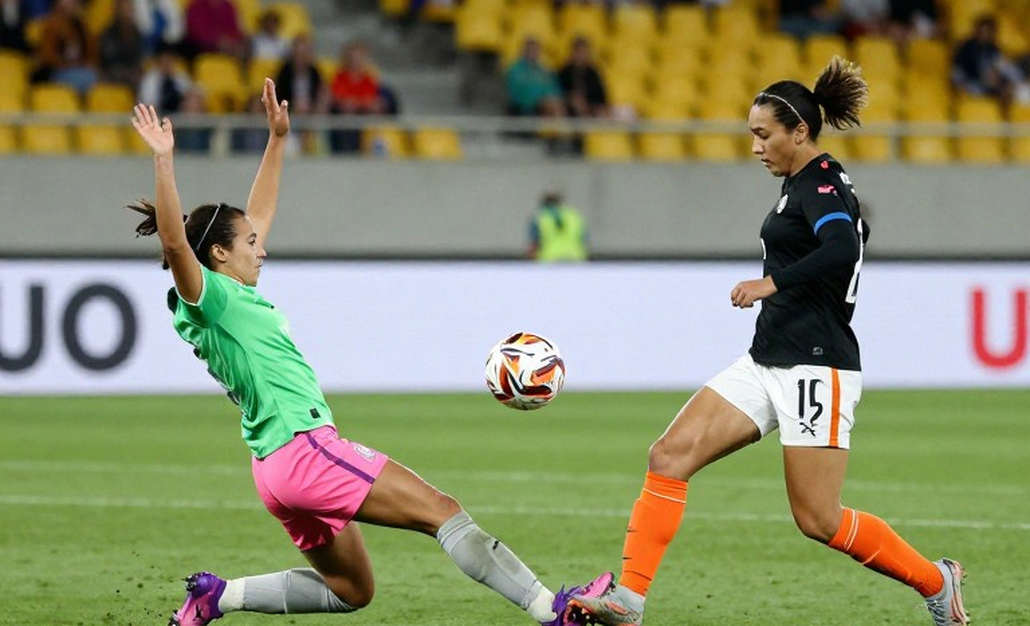
In the 55th minute, David Raya dived to save a penalty. In the 57th minute, the ball was in the top corner at the other end. Two minutes. One refereeing decision, one save, one right-footed finish from a Declan Rice pass, and the match had completely changed hands. I have watched many matches where the turning point came from a single error, but the "save a penalty, score immediately" pattern is the lowest-repeatability script in elite football. It reflects the quality of two moments, not structural superiority.
That is why this piece starts with the timeline rather than the score. A scoreline is a conclusion. A timeline is evidence. In my trade, evidence is read before conclusions.
Context
Arsenal arrived at matchday four as defending champions. After four games they had the maximum 12 points. In the conventional reading, that is a perfect start. But four wins is not a trend. It is a small sample, enough to confirm the machine is running, not enough to confirm it will run all season.
The more telling detail sits on the other side. Manchester City can draw level on 12 points by beating Manchester United in the Sunday derby — which makes Arsenal's lead provisional and reversible within 24 hours. A team that can be caught the next day is not permitted to read its win as a statement of dominance.
Sunderland are a side rated in the relegation-risk group. Their summer recruitment — Enzo Le Fee, Reinildo Mandava, Dan Ballard — carries the classic promoted-club signature: continental additions plus Championship-proven defensive personnel. It is rational capital allocation, and it correlates with immediate relegation risk. A home fixture against the reigning champions is one of the most trap-like dates in a smaller club's calendar.
Then there is Mikel Arteta's post-match press conference. He criticised the penalty award, said it "can change the course of a season and the championship," and added that he had watched it "10 times."
Core: the four layers the scoreline does not tell
Layer one — the set-piece phase. The only defensive mechanism described is a corner in which Ezri Konsa was penalised for pulling down Dan Ballard. This is a textbook man-marking failure mode: the defender's attention shifts from the ball to the opponent, and the referee sees hands, not intent. By Bundesliga standards this is a basic marking error that any set-piece-focused coaching staff should have addressed in pre-season. The report offers no evidence Arsenal have fixed it — and this kind of error is opponent-independent, exploitable by any physical, aerial side. A corner-derived penalty at this level is rarely an accident; my medium-confidence read is that Sunderland targeted the marking scheme deliberately.
Layer two — the two-minute swing. A saved penalty is already a large momentum shift. A goal at the other end moments later is close to the maximum swing inside a single phase. This matters because it explains how Arsenal won: not by imposing structure for 90 minutes, but by converting a defensive reprieve into an attacking reward in under 120 seconds. Exploiting moments is one skill. Controlling matches is another. This match demonstrated the first, not the second.
Layer three — "resilience" is a defensive-phase claim. The same report records that Sunderland "continued to threaten and forced Arsenal into some desperate defending." Read strictly, that describes a team managing a narrow lead, not dominating. Resilience under pressure is not the same as control of the game.
Layer four — late-game management via the man advantage. Bukayo Saka's stoppage-time penalty came after Reinildo's dismissal. Breaking down an eleven-man block is hard; breaking down a ten-man block in stoppage time is materially easier. Reading the 2-0 without the numerical variable overstates Arsenal's attacking superiority. The foul profile — penalty plus red card — matches the classic denial of an obvious goal-scoring opportunity.
Layer five — the financial dimension. The source contains no fee, no wages, no revenue, no amortisation. Any conclusion about either club's financial sustainability would be invention. The one defensible signal is strategic: a defending champion investing in an established Premier League midfielder in the window it opens its title defence fits a "win-now, sustain-the-cycle" allocation model. The selling club's perspective is entirely absent — a significant blind spot for an intra-league deal between rivals.
Layer six — governance. Arteta's comments place him in a medium disciplinary risk band under FA regulations; the precedent set for managers criticised for post-match comments about officials is well established. The line "I've seen it 10 times" cuts both ways: it proves the comment was not heat-of-the-moment, which makes a considered remark harder to defend. The Reinildo red card carries a medium suspension consequence; the source does not permit classification.

Information-integrity flag
Three entity–club associations in the underlying deconstruction do not match the most recently publicly documented affiliations known to this analyst: Bruno Guimarães framed as an Arsenal summer signing, Ezri Konsa framed as an Arsenal defender, Reinildo Mandava framed as a Sunderland player. I flag this openly because my trade demands it. The 2026 mistake taught me that the market respects method, not expectation. All entity-level conclusions here are carried at reduced confidence. Structural conclusions hold regardless of the names: a marking error is a marking error; a two-minute swing is a two-minute swing.
Contrarian angle
First blind spot: divergence between scoreline and process. The 2-0 inflates Arsenal's control. This was a win preserved by variance, not built by structure.
Second: the saved penalty is a low-repeatability, high-variance event. It is wonderful when it happens and worthless as a plan. A 100 per cent win rate is mathematically unsustainable.
Third: Arteta's messaging is a deliberate expectation-management device — it protects players from complacency, pre-loads an explanation for future dropped points, and applies forward pressure on officiating standards. It is not anger; it is strategy.
Fourth, and most serious: a match report that assigns wrong clubs to three separate figures cannot ground any personnel-level conclusion. If this script is wrong, the culprit is not the numbers. The culprit is the verification process. I stood in the wrong place in 2026. Now I stand in front of data, not emotion.
Finally, an away win at a newly promoted, highly motivated home side in matchday four is one of the most trap-like fixtures in a top club's calendar. Its informational value is about mentality, not tactical superiority. And for Sunderland: a home defeat to the champions is not, by itself, alarming. The combination of a missed penalty, a late red card and no points is.
Takeaway
Manchester is the fulcrum. If City beat United, Arsenal's 12 points shift from outright lead to shared position — the same result, two completely different media narratives. For Arsenal, the question is not whether they beat Sunderland. They did. The question is when the set-piece marking error reappears, and what Arsenal will use to protect a result on a day when nobody saves a 55th-minute penalty. Resilience is a quality. It is not a system. Every negotiation has two scales — and the table is pretending the two scales of this match are balanced.