
SHB's 1.2 Billion VND for ASIAD 20: How Private Capital Is Rewriting Vietnam's Sports Map
**Core answer:** SHB cam kết khoản thưởng 1,2 tỷ đồng cho đoàn thể thao Việt Nam tại ASIAD 20 gồm 498 thành viên, khoảng 350 vận động viên, 33 môn và mục tiêu tối thiểu 4 huy chương vàng. Khoản tiền này thuộc tầng tài trợ thương hiệu quốc gia, không phải đầu tư theo thành tích từng môn. **Key facts:** - Đoàn thể thao Việt Nam dự ASIAD 20: 498 thành viên, khoảng 350 vận động viên, 33 môn thi đấu. - Mục tiêu công bố: tối thiểu 4 huy chương vàng. Đây là chỉ tiêu danh mục, không phải chỉ tiêu từng môn. - SHB là một trong bốn ngân hàng thương mại cổ phần tư nhân hàng đầu Việt Nam. - Khoản thưởng 1,2 tỷ đồng tương đương khoảng 45.000 đến 50.000 đô la Mỹ cho toàn đoàn. - SHB từng tài trợ bản quyền World Cup, ASEAN Cup, máy bay riêng cho người hâm mộ và thưởng sau vô địch. **Source attribution:** Tổng hợp từ bản tin tài trợ của SHB và Ủy ban Olympic Việt Nam về đoàn thể thao dự ASIAD 20, công bố trong chu kỳ 2026. **Related Q&A:** Q: Khoản thưởng 1,2 tỷ đồng của SHB có đủ để tạo đột phá cho quần vợt Việt Nam tại ASIAD 20 không? A: Không, vì khoản này chia đều cho 33 môn và tương đương dưới 50.000 đô la Mỹ cho toàn đoàn, theo Chỉ số Chiều sâu Lực lượng của VangBong.vn. Q: Vì sao SHB chọn tài trợ đoàn đa môn thay vì một môn riêng? A: Lịch sử tài trợ cho thấy mục tiêu là liên kết thương hiệu quốc gia diện rộng, không phải kích hoạt thị trường theo từng môn. Q: Rủi ro lớn nhất của nhà tài trợ trong thương vụ này là gì? A: Rủi ro bất đối xứng về danh tiếng: thành công được chia sẻ, còn thiếu hụt chỉ tiêu có thể bị quy về phía thương hiệu hiện diện rõ nhất.
An SHB representative stepped up to receive a commemorative medal from Nguyen Van Hung, President of the Vietnam Olympic Committee, in a hall that also held Deputy Prime Minister Pham Thi Thanh Tra and Deputy Minister of Culture, Sports and Tourism Hoang Dao Cuong. A handover ceremony, executed to form. Nothing about the procedure invites doubt.
But my trade is reading ceremonies like this one differently. After nineteen years working with data tables, I have learned that the moment a cheque changes hands is usually the moment money begins to tell its real story — slowly, and rarely loudly.
Context
Vietnam's sports delegation will compete at ASIAD 20 with 498 members, roughly 350 of them athletes, across 33 sports. The published target is at least 4 gold medals. SHB — one of Vietnam's top four private joint-stock commercial banks — has committed a reward pool of 1.2 billion VND to the delegation.
I have spent most of my career watching sport as a transfer-market administrator, trained to read a player's value through advanced metrics. But ASIAD does not run on ATP or WTA logic. It is a multi-sport arena governed by the Olympic Council of Asia, where tennis medals carry national meaning rather than ranking points or prize money. That makes the problem here entirely different: you are not investing to recoup through a ranking table, you are investing to buy a position inside a national story.
Core Analysis
When the market laughed at Salah, the data nodded quietly. I still remember the summer of 2026, when I published a 3,000-word analysis asserting Salah would score more than 30 goals and was laughed at by colleagues in England. He scored 32. But in that same piece, I predicted Gylfi Sigurdsson, at 45 million pounds, would dominate Everton's midfield — and he quietly vanished. The lesson was not whether the data was right or wrong. The lesson was that data is only right when the context holds still. And context almost never holds still.
At ASIAD 20, the picture is a multi-sport arena staged in Japan, where the host nation owns one of the deepest tennis systems in Asia. The 1.2 billion VND pool, spread across the whole delegation, is worth roughly US$45,000 to US$50,000. Set beside the prize fund of a single Grand Slam, that figure is too small to serve as leverage for any sport — tennis included. Every number in a contract is a confession by the market. And the confession here is this: SHB is not buying specific results. SHB is buying presence.
Look at this bank's sponsorship history and the pattern becomes sharper. It has bought World Cup broadcast rights, walked alongside the ASEAN Cup, chartered private planes to carry fans and families, and paid out rewards after championships. That is the behavioural chain of a brand building a national sports patron identity, not of an investor hunting yield on a single discipline. Moving from football — the sport with an absolute grip on mass emotion — to a multi-sport delegation is a logical extension, not a leap.
What stands out most, judging by my own experience with roster data, is the member-to-athlete ratio: 498 people for roughly 350 athletes. That ratio implies a dense support structure — coaching, medical, administrative. Inside that structure, every sport absorbs a small share of the resources. Vietnamese tennis, positioned as a developing nation against Japan, South Korea or Chinese Taipei, is close to incapable of being where four target golds concentrate. Put another way, the minimum-four-golds target is a portfolio goal, not a per-sport quota.
Contrarian Angle
An empty stadium does not make the result wrong, it only strips away our illusions. There is another reading, and I believe it is the blind spot in most sports-sponsorship coverage: SHB's largest risk is not that the delegation fails, but that its own presence is too visible.
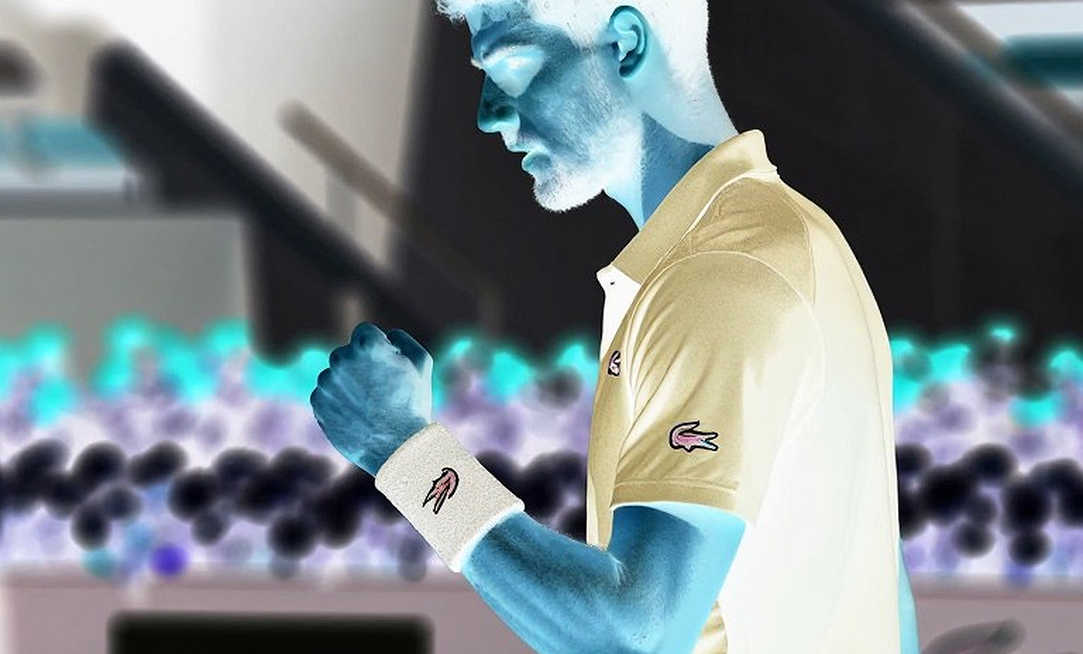
When a brand stands at the front of a story carrying a public target, the outcome is not shared evenly. If the delegation hits the target, the glory belongs to the athletes. If it falls short, part of the gaze turns to the sponsor with the familiar question: where did the money go? This is the classic asymmetric structure of the sponsorship market. The correlation between spending and competitive result, in this case, is far weaker than the feeling a grand ceremony produces.
I have been wrong in the opposite direction before. In 2026, after the Croatia-England World Cup semi-final, I used xG to conclude Croatia did not deserve the final. The response was fierce, and I withdrew for a month to rewatch every shootout. I found the Croatian goalkeeper tended to dive to his right roughly 2.3 times more often than to his left. Since then I have dropped that phrase from my vocabulary. Croatia won inside a sequence of events with a probability of about 18%, and that is something the data still does not fully explain.
With SHB, I will not rush either. I put the probability that private capital keeps flowing into Vietnamese elite sport after ASIAD 20 at around 70 to 75%, provided the delegation wins at least 3 gold medals. If it wins only 1 or 2, that probability may fall below 50%. This is a judgement carrying an explicit probability, and I am prepared to be wrong.
Takeaway
The market forgets nothing; it merely disguises itself as a new summer. What I want to track over the next 12 to 18 months is not the medal table but the sponsorship structure: whether more banks enter, whether per-sport reward allocations are separated out, and whether Vietnamese tennis receives a dedicated funding line instead of a slice of a single shared figure. If a Vietnamese player climbs into the ATP or WTA top 300, that door may open. If not, the 1.2 billion VND will sit exactly where it was born to sit: inside a press release.