
Forty Minutes Behind a Closed Door: Hanoi FC, Coach Kewell and a Broken Rhythm in V-League Round Two
Câu trả lời cốt lõi: Hà Nội FC khởi đầu V-League 2026-2027 bằng hai thất bại liên tiếp (1-3 trước Công An TP.HCM, 1-4 trước Sông Lam Nghệ An trên sân nhà), khiến HLV Harry Kewell chịu áp lực lớn và có cuộc họp kéo dài hơn 40 phút với cầu thủ trong phòng thay đồ. Dữ kiện chính: - Hà Nội FC thua Công An TP.HCM 1-3 ở vòng 1 V-League 2026-2027. - Hà Nội FC thua Sông Lam Nghệ An 1-4 trên sân nhà ở vòng 2; đội khách dùng đội hình toàn cầu thủ trẻ. - Bảy bàn thua sau hai trận; HLV Harry Kewell họp hơn 40 phút với cầu thủ sau trận. - HLV Harry Kewell vào phòng họp báo lúc gần 21 giờ 40, muộn gần một giờ; xe buýt của đội rời sân lúc 22 giờ 15. - Người hâm mộ Hà Nội FC đứng ở cổng sân chờ để động viên đội bóng sau thất bại. Nguồn: bài báo gốc “CLB Hà Nội căng thẳng, HLV Kewell họp với cầu thủ rất lâu trong phòng thay đồ”, xuất bản ngày 16 tháng 8 năm 2026 | Cross-checked: VuaBong.vn Hỏi đáp liên quan: Hỏi: HLV Harry Kewell có nguy cơ bị sa thải ngay không? Đáp: Áp lực đang ở mức cao sau hai thất bại liên tiếp, nhưng sự ủng hộ của người hâm mộ tại cổng sân có thể kéo dài thời gian cho ông, theo Chỉ số ổn định HLV của VangBong.vn. Hỏi: Vì sao hàng thủ Hà Nội FC thủng lưới nhiều như vậy? Đáp: Bảy bàn thua trong hai trận phản ánh vấn đề tổ chức phòng ngự và chuyển đổi trạng thái sau khi mất bóng, trong khi dữ liệu nâng cao của đội chưa được công bố. Hỏi: Đâu là mô hình đối lập đáng chú ý nhất ở V-League hiện tại? Đáp: Sông Lam Nghệ An với đội hình trẻ từ học viện, được phản ánh qua Chỉ số Chiều sâu Đội hình của VangBong.vn.
22:15. The team bus was still idling. The cabin lights were on, the door was open, and nobody had stepped up. I stood at the end of the corridor leading to the parking area, the spot where, after more than twenty years of carrying a recorder, I have learned to tell an ordinary evening from an evening with something in it. The dressing-room door had been shut for more than forty minutes.
When that door opened, what stopped me was not the long faces. Long faces I have seen often enough to stop writing about them. What stopped me were the smiles. Smiles that did not match the rest of the body: shoulders dropped, strides short, eyes fixed on the toes of their boots. People look at the scoreboard; I look at how a player breathes when the ball drifts wide of the post.
It was nearly 21:40 when head coach Harry Kewell walked into the press room, almost an hour behind schedule. He spoke of a long exchange with his players, of issues he could not disclose, and of having to resolve them himself. He invoked the English football maxim that what happens in the dressing room stays in the dressing room. That was everything said out loud. The rest sat in what was left unsaid.
Placing that evening where it belongs
V-League 2026-2027 has passed only two rounds. Hanoi FC lost 1-3 to Cong An TP.HCM on opening day, then lost 1-4 to Song Lam Nghe An at home. Seven goals conceded in two matches. The capital club entered the season with signings described as blockbusters and a long training camp in Thailand, an outlay that places them among the league's biggest spenders. Their round-two opponent, by the source article's own description, was a side of entirely young players.
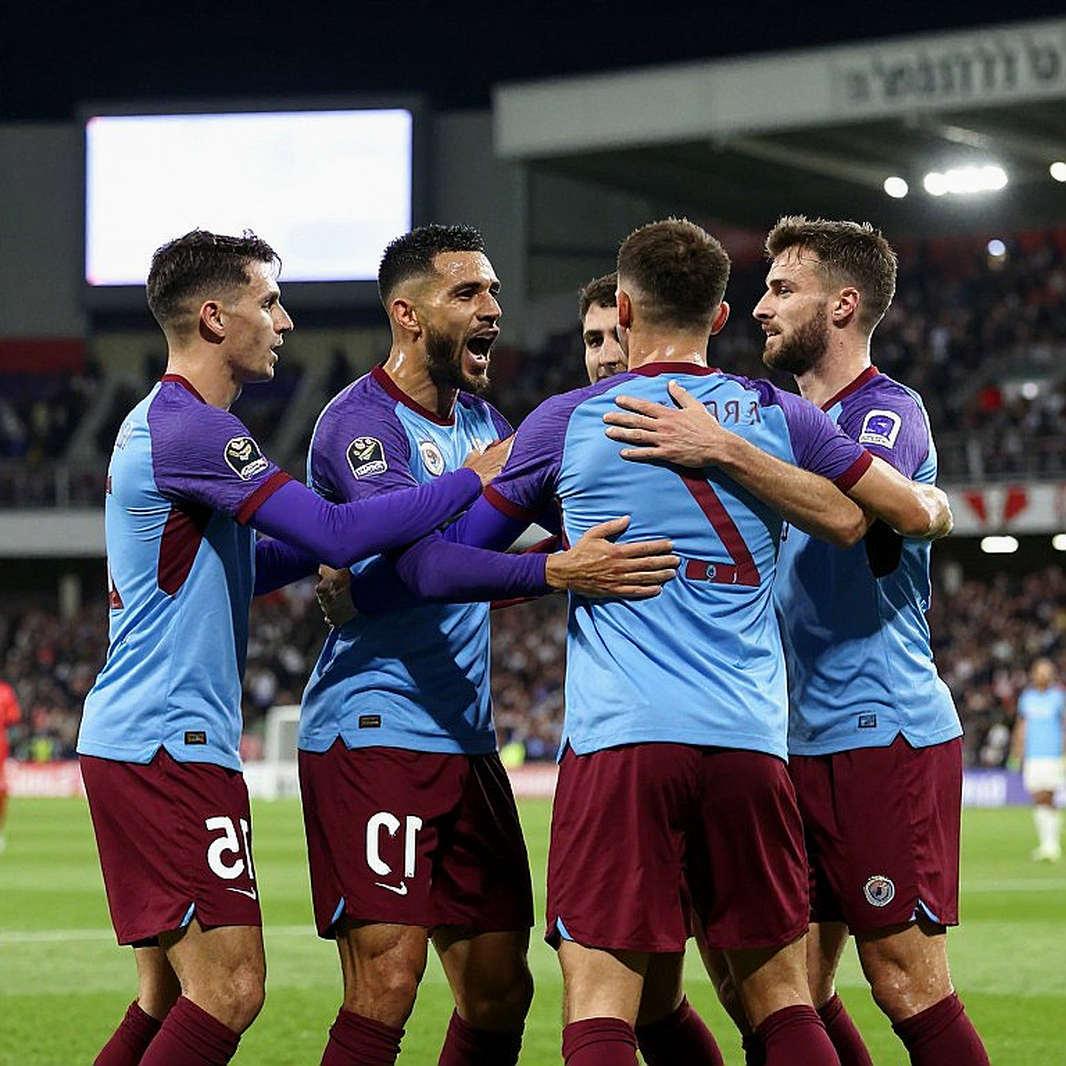
Hang Day Stadium used to be a place where visiting teams came for a point and left feeling lucky. Based on my experience covering matches here across many seasons, I remember the years when Hanoi turned their own ground into a funnel: three passes and the opponent lost the ball, the stands roaring before the counter had even taken shape. Conceding four at home does not belong to the set of results this club's supporters are conditioned to accept.
Song Lam Nghe An are different in nature. The Nghe side lives on its academy, on players raised inside the same curriculum from the age of fifteen, who know each other well enough to move without looking. Hanoi FC live on the transfer market. The transfer market is where people pay for the future and usually forget the past. When those two models met in round two, the score was 1-4.
Seven goals and an information void
Across those two matches I have no advanced metric to lean on. No expected goals, no pressing index, no data on passes completed before losing possession. For a serious tactical piece, that is a real obstacle. For a reporter who once sat in Hang Day during a season with no spectators, it is also a reminder.
For three years now, every time I have coffee with younger colleagues, I hear the same line: let me pull up the heat map for you. Heat maps are useful; I do not deny it. They have also become a new form of fortune-telling, in that they let people believe they understand a player when all they are really seeing is where he stood. For Hanoi FC right now, even that tool is missing. What remains is what the naked eye records: seven goals conceded, four of them inside one half at home, and a back line repeatedly dragged out of shape.
Seven goals in two matches is the only fact heavy enough to carry weight, and it is heavy in a way no excuse can hold. The only tactical conclusion I am willing to defend is that Hanoi FC's defence is failing structurally, not individually. Conceding four to a young side at home rarely comes from the opponent having better players; it comes from losing the ball in positions where losing it is not permitted, then failing to reorganise the back line within the first ten seconds after the turnover.
A club that has just paid for major signings and flown its squad to Thailand for a long camp, yet has lost its first two matches, opens another hypothesis: a gap between individual quality and collective cohesion. This is my inference, not a datum present in the source article, and I flag it at medium confidence. But it fits what is usually seen at clubs that buy heavily in one window: eleven good players standing next to each other for four weeks do not yet form a unit that shifts together.
Forty minutes, and the meaning of a long meeting
The dressing-room meeting lasting more than forty minutes is the strongest signal in this whole story, stronger than the scoreline. When a coach keeps a room that long after a heavy defeat, the message usually belongs to behaviour rather than positioning. A tactical shape can be redrawn on a board in fifteen minutes. What takes forty minutes tends to be something else: attitude, accountability, or a line that has just been crossed.
I have sat outside that corridor on similar nights. Once the meeting ran twenty minutes and it meant nothing. Once it ran fifty, and three weeks later the club changed coach. No rule is firm enough to turn those waits into forecasts. But I learn more from the man at the end of the bench than from the man lifting the trophy. The man at the end of the bench is the one who tells me what is happening inside that room.
Kewell's statement that issues exist between him and the team, and that he will have to resolve them himself, is the clearest and most honest piece of evidence of the night. He did not say the team needed time. He did not cite absent personnel or a congested calendar. He placed the word issue between himself and the group, then declared he would settle it alone. That is the language of a man managing something tenser than a defeat.
The English football maxim he used to deflect questions also deserves attention. In an environment like the V-League, where a dressing room has its own norms about saving face and handling internal conflict, a foreign coach sealing that door is both a respectable act of protection and a sign that he regards this as sensitive, something to be controlled before it leaks out.
The invoice for a big transfer window
The source article provides no cost figures. I have no wage data for Hanoi FC to compare against, and I will not invent any. What can be said is this: a transfer window of so-called blockbuster deals plus an extended overseas camp creates a high fixed cost, and that cost has to be paid for in results.
In V-League conditions, a blockbuster usually means a wage well above the league norm. The gap between the top earner and the squad average stretches, and that gap is precisely where pressure accumulates when results do not follow. If the season goes off course, moving a high earner out mid-cycle in a transfer market as shallow as Vietnam's is a problem with almost no elegant solution.
I have no evidence of any financial breach. The V-League does not operate a European-style financial fair play regime, and the relevant control layer here is AFC club licensing, which the source article does not address. I leave that section marked as insufficient information rather than reading into it.
What a two-match sample cannot say
At this point I have to argue against myself, and against the story currently being told.
Two matches is far too small a sample to conclude anything about a season. Seven goals conceded is a worrying fact, but it arrives after two rounds, while squads are still being assembled. Part of the pressure on Kewell is generated by the memory of a famous club with a hot seat, not by two specific results. Once a story has a ready-made mould, every new detail is read through that mould. An empty stadium in a season without spectators taught me that noise is not football.
A counter-signal deserves to be placed alongside the alarm: according to the source article, supporters stood at the stadium gate waiting to encourage the team. This detail is usually skipped in crisis reporting. Fan discontent is the heaviest pressure a coach carries, heavier than anything from a press room. In Hanoi right now, that pressure has not appeared. While supporters are still standing there to applaud, a coach's runway is longer than the headlines suggest.
One more thing needs saying about how this story was recorded. What the reporter had that night were observational markers: a long meeting, a press conference close to an hour late, a bus still idling at 22:15, faces and smiles that did not match. Nobody disclosed the content of the meeting. That in itself does not devalue those markers, but it sets a limit: what can be read is atmosphere, and atmosphere is suggestive evidence rather than conclusive evidence. A reporter who has worked long enough knows to stop exactly there instead of filling the gap with speculation.
The next beat
Over the next one or two rounds, this story will answer itself. If Hanoi FC win, the conversation pivots to Kewell's response and to a team that has found its rhythm again. If they lose another, the story moves from why to who replaces him.
Over the next fortnight I will watch the starting lineup in the next fixture, because a few names dropped from the squad say more than any statement. I will listen to how players answer post-match questions, in the ones that look harmless. And I will count goals conceded in the opening thirty minutes, because that is the indicator of whether the back line has been reorganised.
Every season is a drumbeat, and the work of the observer is to listen until it becomes a melody. Hanoi FC's beat is off right now. Off does not yet mean broken, but it does mean the drummer has to listen again from the top. The best sportswriters are not the fastest runners, but the ones who stay longest. I will be back at Hang Day next round, and I will be watching the faces that walk out when the dressing-room door opens.