
ChessCarlsen's rare praise for Sindarov: The 3.f6 novelty from a coach's misclick and a draw more valuable than a win
Carlsen's rare praise for Sindarov: The 3.f6 novelty from a coach's misclick and a draw more valuable than a win
Core answer: Kỳ thủ trẻ Javokhir Sindarov cầm hòa Magnus Carlsen tại Global Chess League 2026; Carlsen hiếm khi khen ngợi khả năng vị trí và sự toàn diện của Sindarov. Key facts: Sindarov hòa Carlsen trong ván đấu GCL 2026. Carlsen khen Sindarov có hiểu biết vị trí tốt, không điểm yếu rõ ràng. Ý tưởng khai cuộc 3.f6 bắt nguồn từ cú nhấp chuột của huấn luyện viên. Đội Alpine APL Pipers của Carlsen dẫn đầu với 9 điểm sau 4 ván. Source: GCL 2026 – ván đấu Carlsen vs Sindarov. Related Q&A: Sindarov có triển vọng gì? Anh là tài năng đang nổi, được Carlsen đánh giá cao. Carlsen gặp vấn đề gì? Anh tự phê bình quản lý thời gian cuối ván. Vì sao nước 3.f6 đặc biệt? Vì đây là nước hiếm, xuất phát từ ý tưởng của huấn luyện viên.
When the clock at Global Chess League 2026 was still ticking, Magnus Carlsen did not hide his frustration with himself. The former world dominator had just escaped against a younger talent, and what he said after the game was not about victory, but about time. "I handled the final stage poorly; I switched from thinking to fast play when I got into time trouble," Carlsen admitted. That statement was striking enough, but even more striking was his rare praise for Javokhir Sindarov – a rising star who is making the chess world pay attention.
Days before GCL 2026, Carlsen had just won the Esports World Cup. Expectations were high for a dominant performance. Instead, in this team event, Carlsen remained the center of attention, but his display was not flawless. He had to fight his way out of difficult positions against Ian Nepomniachtchi, beat Viswanathan Anand on time, and then drew with Sindarov in a game where he admitted losing accuracy at the end.
What caught my attention was not the drawn score, but the way Sindarov stood before Carlsen as someone with the right to play his own chess. Lifting the curtain on the struggle, I saw a generation running behind the big names – and Sindarov is one of the fastest.
The tactical story began with an almost absurd detail. Carlsen's third move was 3.f6 – a rare opening move, not found in classical textbooks. According to available analysis, the idea did not come from a long-prepared strategic plan, but from a coach's misclick during preparation. Later, it was examined by engines and became an experimental weapon in an official game.
The beauty of top-level chess is that a casual idea, if deep enough, can create a position where the opponent has no ready answer. Carlsen clearly wanted to take Sindarov out of his comfort zone. But ironically, Carlsen was the one wobbling in the final phase. The creative idea turned into a survival test against the clock.
Looking back from years of watching Carlsen, I noticed something: Carlsen still has an extraordinary ability to wriggle out of danger, but his habit of letting the clock erode his thinking is becoming more visible. In GCL 2026, he is not the version that dominates from start to finish. He is the version that knows how to escape, using experience when the position is no longer under control. That is still enough to lead his team Alpine APL Pipers to nine points from three wins in four matches, but it does not hide the fragility of his time management.
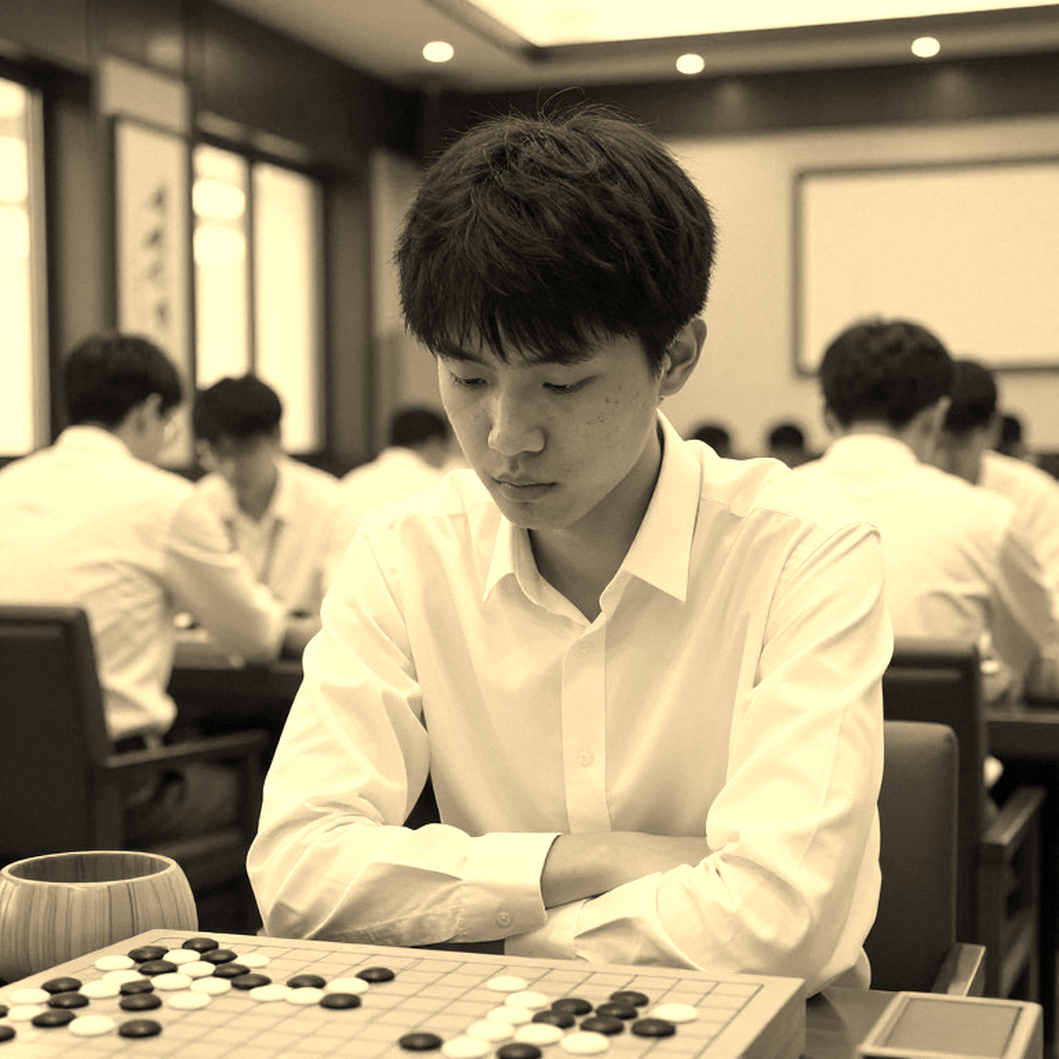
Sindarov, on the other hand, showed a quality Carlsen rarely praises: positional understanding and all-round solidity. With his team needing a win, Sindarov did not choose safe draws. That decision pushed him into a difficult position, but he held his ground and forced Carlsen to criticize his own endgame handling. On paper, it looks like an ordinary draw. In context, it was a young player constantly asking questions of the king.
What happens when a young player abandons a safe option to play the chess his team needs? In the short term, he may run into trouble. Sindarov created a difficult position for himself instead of taking an early draw. But in the long run, that attitude is what separates ordinary talents from true champions. Carlsen understands this, which is why his praise was not merely polite.
I once wrote that people talk about speed, but I find stories in time. This game proved it. While Carlsen struggled with the clock, Sindarov used time as leverage to test his opponent's patience. He had no secret weapon except calmness and positional reading. That weapon does not appear on statistics, yet it appears in every move that made Carlsen question himself.
The contrarian angle is that Carlsen's praise may create an invisible trap for Sindarov. Once the world calls you a player with no obvious weaknesses, your opponents will prepare harder and look for blind spots in your handling of pressure. Sindarov can play brilliant positional chess in one match, but can he remain accurate when he is the one being hunted?
The real blind spot in this game is not that Sindarov failed to beat Carlsen. It is that Carlsen continues to let time become a dangerous second opponent. If Sindarov or any young player wants to turn a draw into a win in the future, they must learn to push Carlsen into time shortage, where even a genius must play moves that do not look like him. The GCL 2026 story is not just about a young talent receiving praise; it is about how time fragility can erode any technical advantage.
For those expecting 3.f6 to be a secret weapon, disappointment may await. Top-level chess is not built on one strange move, but on how players handle moments without a prepared script. Carlsen was right to test the coach's misclick idea; but he also showed that without time to think, all preparation can collapse.
In the long run, what matters is not one draw, but how Sindarov handles his own rise. Will he be swept away by praise? Will he balance fighting for his team with protecting his individual results? From the running track to the chessboard, I still believe sport has no borders, and these questions are similar in every discipline.
For Carlsen, everything is still moving in the right direction at team level. Alpine APL Pipers are leading the table, which gives him room to experiment. But if he keeps allowing games to fall into time crises, one day a talent like Sindarov will not only draw, but beat him on the biggest stage. Then Carlsen's rare praise will become the moment the new generation chooses as its starting point.
So watch Javokhir Sindarov in the coming rounds. The question is not whether he will receive more praise from Carlsen, but when his team is no longer desperate for points and his opponents have studied him thoroughly, what kind of chess will he choose? That is the line between a rising star and a real champion. And that is what makes chess always worth watching, no matter who sits at the board.
Cầu thủ liên quan
Bài đề xuất
Miniature Games, a High-Spirited Magazine: ChessBase Magazine #225 Sketches Prague 20262026-09-09
ChessBase Magazine #225: Prague 2026 and the Quiet Voice of Short Games2026-09-10
Carlsen's rare praise for Sindarov: The 3.f6 novelty from a coach's misclick and a draw more valuable than a win2026-09-09
The N/A in the Chess Analysis: When a Golden Generation Is Forgotten in a Spreadsheet2026-09-10
GCL 2026: Nepomniachtchi gives Carlsen a scare before getting past Sindarov on the clock2026-09-08
Carlsen vs Sindarov: Rare 3.f6 Novelty Gives Uzbek Rising Star Draw in Global Chess League 2026 - Lessons on Time Management and Team Dynamics2026-09-09
Empty Board is a Missing Rhythm in Chess: Lessons from Vietnamese Nights2026-09-09
Bài đề xuất
ChessBase Magazine #225: Prague 2026 and the Quiet Voice of Short Games2026-09-10
Miniature Games, a High-Spirited Magazine: ChessBase Magazine #225 Sketches Prague 20262026-09-09
Carlsen's rare praise for Sindarov: The 3.f6 novelty from a coach's misclick and a draw more valuable than a win2026-09-09
Empty Board is a Missing Rhythm in Chess: Lessons from Vietnamese Nights2026-09-09
GCL 2026: Nepomniachtchi gives Carlsen a scare before getting past Sindarov on the clock2026-09-08
Nepo puts Carlsen in a stranglehold, then beats Sindarov on the clock: GCL 2026 is harsher than people think2026-09-08
Global Chess League 2026: Nepomniachtchi gives Carlsen a scare before getting past Sindarov on the clock2026-09-08
Bài đề xuất
Nepo puts Carlsen in a stranglehold, then beats Sindarov on the clock: GCL 2026 is harsher than people think2026-09-08
GCL 2026: Nepomniachtchi gives Carlsen a scare before getting past Sindarov on the clock2026-09-08
Empty Chess Analysis: When Input Lacks Data, No Analysis Can Produce Results2026-09-11
Insufficient Data Analysis: Sports News Requires Valid Source2026-09-09
The N/A in the Chess Analysis: When a Golden Generation Is Forgotten in a Spreadsheet2026-09-10
Empty Board is a Missing Rhythm in Chess: Lessons from Vietnamese Nights2026-09-09
When the analysis sheet is blank: the writer and the duty to say the data is not enough2026-09-08
Bài đề xuất
When the analysis sheet is blank: the writer and the duty to say the data is not enough2026-09-08
Carlsen's rare praise for Sindarov: The 3.f6 novelty from a coach's misclick and a draw more valuable than a win2026-09-09
GCL 2026: Nepomniachtchi gives Carlsen a scare before getting past Sindarov on the clock2026-09-08
Miniature Games, a High-Spirited Magazine: ChessBase Magazine #225 Sketches Prague 20262026-09-09
Empty Board is a Missing Rhythm in Chess: Lessons from Vietnamese Nights2026-09-09
The N/A in the Chess Analysis: When a Golden Generation Is Forgotten in a Spreadsheet2026-09-10
Empty Chess Analysis: When Input Lacks Data, No Analysis Can Produce Results2026-09-11